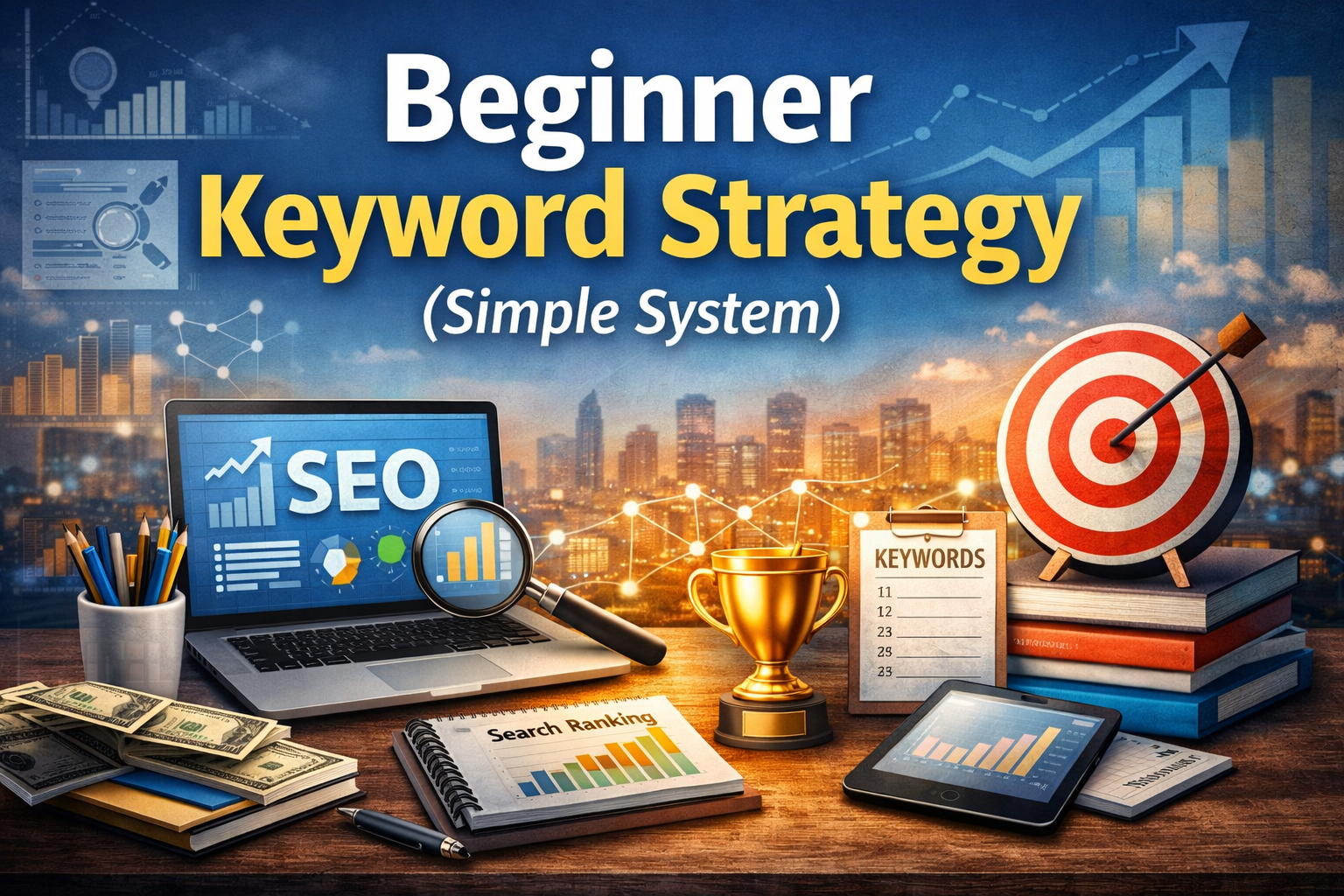
Most beginners overthink keyword research. They chase tools, trends, and competition scores instead of focusing on what actually matters. But the truth is simple: you don’t need complex data to find keywords that rank. You need a clear, repeatable system that helps you find topics people actually search for — and that you can realistically win with.
This guide gives you that system.
Introduction
Keyword strategy is the foundation of SEO. It determines what you write, who finds it, and how fast your site grows. The problem is that most beginners start with random topics or high‑competition keywords that never rank. They end up writing great content that Google doesn’t notice. Keyword strategy is the process of choosing the right topics to write about so Google can understand your content and send you the right visitors. When you choose the right keywords, everything becomes easier: writing, ranking, traffic, and growth. Most beginners fail because they pick keywords that are too competitive or too broad. This guide shows you how to build a simple keyword strategy that works — even if you’re starting from zero.
What a Keyword Strategy Actually Is
A keyword strategy is your plan for choosing topics that:
- Match what people are searching for
- Are easy enough for you to rank for
- Connect naturally to your niche or offer
It’s not about chasing numbers. It’s about understanding search intent and building authority step by step.
The Simple 3‑Step Keyword System
Step 1: Find Beginner‑Friendly Keywords
Beginner‑friendly keywords are low‑competition, high‑intent phrases that real people search for when they need help. These usually start with:
how
what
why
best
simple
for beginners
Examples:
- how to start affiliate marketing with no experience
- simple online business ideas for beginners
- how to get traffic for a new blog
You can find these using free tools like Google Autocomplete, People Also Ask, and YouTube search suggestions.
And especially your internal keyword tools:
These tools help you:
- Generate beginner‑friendly keyword ideas
- Create SEO‑ready titles and meta descriptions
- Build outlines around search intent
- Optimize content for ranking
- Identify easy‑to‑rank topics
This makes keyword research simple, fast, and beginner‑proof.
Step 2: Group Keywords into Clusters
Once you have 20–30 beginner‑friendly keywords, group them into clusters. A cluster is a group of related topics that support each other.
Example clusters:
- Affiliate Marketing Basics
- Traffic and Email Growth
- Mindset and Overwhelm
- Tools and Systems
Each cluster becomes a mini‑series of articles. When your posts link to each other, Google sees you as an authority in that topic — and rewards you with higher rankings.
Step 3: Match Content to Search Intent
Every keyword has a purpose. Your job is to match that purpose with the right type of content.
- Informational → step‑by‑step guides
- Transactional → comparison posts
- Navigational → reviews
- Inspirational → stories or case studies
When your content matches intent, Google rewards you with better rankings and stronger engagement.
How to Know If a Keyword Is Worth It
Ask yourself three simple questions:
- Is it beginner‑friendly?
- Does it connect to your niche or offer?
- Can you create better content than what’s ranking now?
If the answer is yes to all three, it’s a keyword worth targeting.
Common Beginner Mistakes
Avoid these traps:
- Picking keywords that are too broad
- Ignoring search intent
- Writing without internal links
- Using tools without understanding the audience
- Publishing random topics with no structure
A simple keyword system eliminates these mistakes.
Example: Building a Keyword Cluster
If your niche is affiliate marketing for beginners, your cluster might look like this:
- how to start affiliate marketing with no experience
- best affiliate programs for beginners
- simple affiliate marketing system
- beginner mistakes in affiliate marketing
- how to get traffic for affiliate marketing
Each post links to the others. Together, they form a beginner keyword cluster that builds authority and drives consistent traffic.
Key Takeaways
- Keyword strategy is about clarity, not complexity
- Start with beginner‑friendly, low‑competition topics
- Group keywords into clusters to build authority
- Match content to search intent
- Link posts together to strengthen your site
Final Thought
Keyword strategy isn’t about chasing trends — it’s about building a foundation. When you focus on beginner intent and clarity, your content compounds naturally.
Final Verdict
A simple keyword system beats complex tools every time. It’s repeatable, scalable, and perfect for beginners who want real results.
Start Your Free Website Setup
Launch your beginner‑friendly site today with a done‑for‑you system that includes training, hosting, and built‑in income streams.
Related Guides
These related guides expand the beginner SEO foundation you’re building in this article. Each one reinforces the same core system—simple steps, clear strategy, and beginner‑friendly execution—so you can grow your traffic faster and stay focused on what actually works. Explore the guides below to deepen your understanding and strengthen your keyword strategy.
- How SEO Works for Beginners
- Simple 3‑Post Weekly Strategy for Total Beginners
- Get Your First 100 Visitors
- How to Promote Your Blog for Free
- How Long Does SEO Take for Beginners?
- How to Write Blog Posts That Get Traffic
- Beginner Keyword Research: How to Find Topics That Actually Rank
Tools
These tools are designed to make keyword research and content creation easier, faster, and more accurate. Each one supports a different part of your SEO workflow—from finding beginner‑friendly keywords to optimizing your articles for ranking—so you can build authority without overthinking the process. Use them together to create a simple, repeatable system that compounds over time.

Frederick Croniser shares practical tips, tools, and resources to help make building income online simpler and more approachable. Through this website, Frederick provides helpful content and recommendations, including the Plug-In Profit Site, a system designed to help beginners get started online with a website, step-by-step training, and built-in income streams. Learn more about getting started with Plug-In Profit Site here.